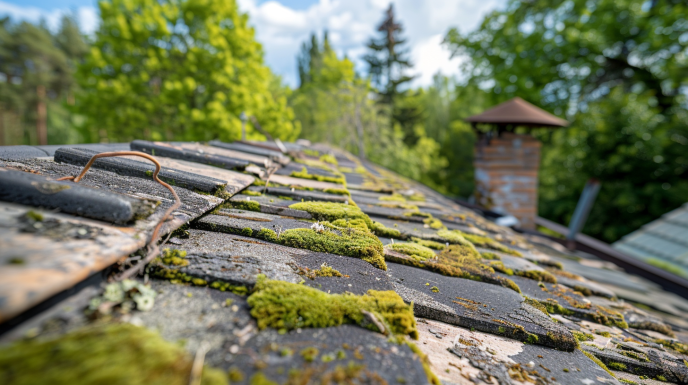
Roof stains and moss growth tend to become much more noticeable in Plainview after long stretches of humid weather, rainy spring seasons, and shaded summer conditions. Homeowners often notice dark streaks across shingles or patches of moss collecting along valleys and north-facing roof slopes. While many people assume this is only a cosmetic issue, moss and algae growth can gradually shorten the life of a roofing system if left untreated.
That is why proper roof cleaning and moss removal matter more than many homeowners realize. A clean roof is not just about appearance. It is about reducing moisture retention, protecting shingles, and preventing long-term deterioration caused by Long Island weather conditions.
In this guide, we’ll cover:
- What causes moss and algae growth on Plainview roofs
- Safe roof cleaning methods for asphalt shingles
- How moss and algae affect roof lifespan
- Preventing future roof growth on Long Island homes
- When roof cleaning is no longer enough
- Why ventilation and drainage matter for roof performance
If your roof is developing dark streaks, moss buildup, or visible moisture-related staining, Rebuild America can help.
Why Roof Cleaning and Moss Removal Matter for Plainview Properties
Roof cleaning becomes important in Plainview because local homes experience the exact conditions that encourage moss and algae growth. Humidity, mature tree coverage, shaded roof sections, and seasonal moisture exposure all contribute to buildup over time.
Moss and Algae Create Different Roofing Problems
Algae growth usually appears as black streaking or discoloration across shingles. While algae primarily affects appearance, it can also increase heat absorption and contribute to premature roof aging.
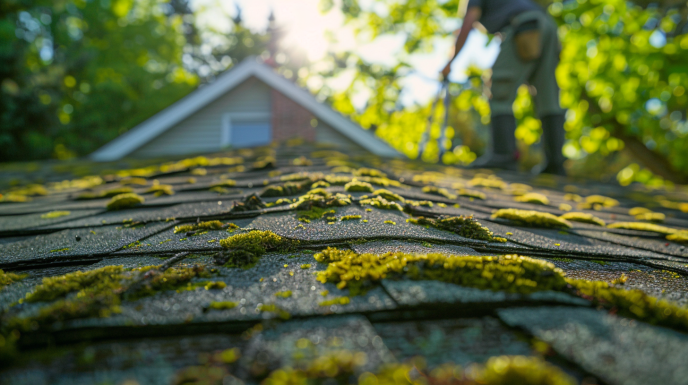
Moss is typically more damaging because it traps moisture directly against roofing materials. As moss thickens, it can lift shingle edges, slow drainage, and increase moisture exposure beneath the roof surface.
For homes surrounded by mature trees, these issues often develop faster because shaded roof areas remain damp longer after storms and humid weather.
Long Island Weather Encourages Roof Growth
Homes throughout Plainview regularly deal with:
- Humid summers
- Seasonal rain and snow
- Tree-lined neighborhoods with heavy shade
- Freeze-thaw cycles during winter
- Moisture buildup after storms
These conditions create an ideal environment for algae growth and moss buildup, especially on north-facing roof slopes that receive less direct sunlight.
Roof Cleaning Helps Protect Roof Lifespan
Professional roof cleaning helps:
- Reduce moisture retention
- Extend roof lifespan
- Improve roof drainage
- Prevent premature shingle wear
- Improve curb appeal
For many homeowners, roof cleaning becomes part of a long-term maintenance strategy rather than a one-time cosmetic improvement.
What Plainview Homeowners Should Know Before Cleaning a Roof
Before scheduling roof cleaning or attempting moss removal, homeowners should understand that improper cleaning methods can create more damage than the moss itself.
Pressure Washing Can Damage Asphalt Shingles
One of the biggest roof cleaning mistakes homeowners make is assuming pressure washing is the best solution.
High-pressure cleaning can:
- Remove protective shingle granules
- Loosen shingles
- Damage flashing and sealants
- Shorten roof lifespan
This is especially risky on older asphalt roofing systems commonly found throughout Plainview neighborhoods.
Safe roof cleaning methods for shingles almost always rely on lower-pressure techniques designed to protect the roofing material rather than aggressively blasting the surface.
Older Roofs Require a Different Cleaning Approach
Roof age plays a major role in determining the safest cleaning method.
Newer roofs with strong shingle integrity can usually handle soft washing safely. Older roofs with curling shingles, granule loss, exposed fasteners, or weakened flashing may require repairs before cleaning can be performed properly.
Aggressive cleaning on an aging roof can accelerate deterioration instead of helping it.
That is why roof cleaning should always begin with a full evaluation of:
- Shingle condition
- Flashing integrity
- Ventilation performance
- Drainage patterns
- Existing moisture damage
Tree Coverage and Shade Increase Moss Growth
Many Plainview homes feature mature tree-lined lots that create prolonged shade across portions of the roof. These shaded sections dry more slowly after rainstorms and humidity, creating ideal conditions for recurring moss growth.
Reducing overhanging branches and improving airflow around the roof can significantly reduce future buildup and improve long-term roof performance.
Roof Cleaning and Moss Removal Strategies That Work for Plainview Homes
The safest roof cleaning strategy depends on the roofing material, roof age, and severity of moss or algae growth.
Soft Washing Removes Algae Without Damaging Shingles
For most asphalt roofing systems, soft washing is considered the safest roof cleaning method.
Soft washing uses:
- Low-pressure application methods
- Roofing-safe cleaning solutions
- Controlled rinsing techniques
This process helps remove algae streaks and organic buildup without stripping protective granules from shingles.
For homeowners researching algae removal from roofing systems, soft washing offers a safer alternative to pressure washing while still delivering effective results.
Manual Moss Removal Protects Roofing Materials
When moss growth becomes thicker or more established, manual removal may become necessary.
Safe moss removal for residential roofs often involves:
- Gentle brushing methods
- Controlled debris removal
- Targeted roof-safe treatment applications
Aggressive scraping can loosen shingles and expose roofing materials to additional moisture damage.
This is particularly important on architectural asphalt shingles like GAF Timberline HDZ systems commonly installed across Long Island.
Zinc and Copper Strips Help Reduce Future Moss Growth
One long-term prevention strategy involves installing zinc or copper strips near the roof ridge.
As rainwater flows over the metal, it helps slow future moss and algae growth naturally across the roofing surface.
This approach works especially well for:
- Heavily shaded roofs
- North-facing roof slopes
- Homes surrounded by mature trees
While not a complete solution by itself, it can help reduce recurring moss growth and future cleaning needs.
Proper Ventilation and Drainage Reduce Moisture Retention
Roof ventilation is one of the most overlooked parts of preventing moss growth.
Poor ventilation can trap moisture beneath roofing materials and increase condensation within attic spaces. That excess moisture often contributes to algae growth and moss development over time.
A properly functioning roof system should include:
- Balanced attic ventilation
- Effective roof drainage
- Clear gutter systems
- Proper flashing integration
Homes with clogged gutters or poor drainage patterns often experience recurring moss growth because water remains trapped along roof edges and valleys longer than it should.
Addressing moisture-control problems throughout the roofing system is often just as important as surface cleaning itself.
DIY Roof Cleaning Often Creates More Problems Than Homeowners Expect
Many homeowners initially consider handling roof cleaning themselves. While basic gutter cleaning may be manageable, roof cleaning is far more technical than most people expect.
Improper Roof Cleaning Can Damage Shingles and Flashing
DIY roof cleaning often creates problems such as:
- Broken or loosened shingles
- Damaged flashing
- Granule loss from aggressive brushing
- Improper chemical application
- Safety risks from steep roof surfaces
Walking on damp roofs covered with algae or moss can also become dangerous, especially during humid Long Island weather.
One of the most important things homeowners can do is make sure the cleaning method matches the condition and age of the roofing system.
Long-Term Roof Protection Requires More Than Surface Cleaning
Cleaning moss and algae from the roof surface is important, but long-term roof performance depends on addressing the conditions that caused the growth in the first place.
Moisture Problems Often Develop Beneath the Roofing Surface
Across Long Island, we frequently inspect roofs where visible moss growth was only part of the problem.
Hidden issues often include:
- Trapped moisture beneath shingles
- Failing flashing around roof penetrations
- Poor ventilation
- Drainage problems near valleys and gutters
If these underlying problems are not corrected, algae and moss often return quickly even after professional cleaning.
Some Roofs Need Repairs or Replacement Instead of Cleaning
Cleaning is not always the right solution.
Some roofs already have:
- Advanced granule loss
- Curling shingles
- Soft roof decking
- Persistent leaks
- Structural moisture damage
In those situations, cleaning may only temporarily improve appearance while larger roofing issues continue developing underneath.
A professional inspection helps determine whether the roof can still be safely cleaned or whether repairs or replacement make more sense long-term.
Proper Roof Installation Helps Prevent Future Growth
Improper roof installation can contribute to moisture retention and recurring cleaning issues.
Problems such as:
- Poor ventilation planning
- Incorrect flashing placement
- Inadequate drainage
- Improper shingle alignment
can all create conditions that encourage moss and algae growth.
This is why Rebuild America approaches roofing systems as complete exterior systems instead of isolated repairs or cosmetic maintenance projects.
With more than three generations of roofing experience and recognition as a GAF Master Elite and President’s Club contractor, our focus is always on long-term roof performance and protection.
Best Practices for Roof Cleaning and Moss Prevention in Plainview
The best roof maintenance strategy focuses just as much on prevention as it does on removing existing buildup.
Consistent Maintenance Helps Prevent Long-Term Roof Damage
The most effective roof maintenance practices include:
- Avoiding pressure washing on asphalt shingles
- Scheduling periodic roof inspections
- Trimming overhanging tree branches
- Keeping gutters clear and draining properly
- Addressing algae streaks early before moss develops
- Improving ventilation in moisture-prone attic spaces
Homes with heavy tree coverage or shaded roof sections may require more frequent inspections to help prevent recurring moss growth.
Benefits and Risks of Roof Cleaning for Plainview Homes
Roof cleaning can significantly improve roof performance when done correctly, but improper cleaning methods can shorten roof lifespan instead of extending it.
Benefits of Professional Roof Cleaning
Professional roof cleaning helps:
- Extend roof lifespan
- Remove algae streaking and moss buildup
- Improve curb appeal
- Reduce moisture retention
- Identify developing roof problems early
Risks of Improper Roof Cleaning
Improper roof cleaning can:
- Damage shingles through pressure washing
- Loosen roofing materials during aggressive scraping
- Harm landscaping with incorrect cleaning chemicals
- Expose hidden roof weaknesses if older roofs are cleaned improperly
The safest roof cleaning strategy is always one tailored to the roofing material, roof condition, and moisture conditions affecting the property.
Plainview Roof Cleaning & Moss Removal Questions Homeowners Commonly Ask
When homeowners start noticing black streaks, moss buildup, or damp roof sections, the same questions usually come up about safety, roof lifespan, and the best way to prevent future damage. Below are some of the most common roof cleaning and moss removal questions we hear from Plainview property owners.