A slate roof on Long Island typically costs between roughly $20,000 and $60,000 installed, and most homeowners land somewhere near the middle depending on roof size, the type of slate, and how much structural reinforcement the home needs. Natural slate sits at the top of the price range, while synthetic slate can bring the same look down closer to the cost of a premium asphalt roof.
This guide breaks down real 2026 slate roof pricing, what actually drives the number up or down, how slate compares to cedar shake, and the Nassau County permit and code details that matter before you commit. If you have been quoted a slate roof and want to understand whether the price is fair, this is the context you need.
Key Takeaways
- A natural slate roof averages around $30,000 nationally and commonly runs $20,000 to $60,000 installed, with synthetic slate options starting well below that.
- Labor makes up 50% to 60% of a slate roof’s total cost, and many Long Island homes need $1,000 to $10,000 in framing reinforcement to carry the weight.
- New York’s building code bars installing a new roof over an existing slate, wood shake, or two-layer roof, so a full tear-off is usually required in Nassau County.
- Slate lasts 75 to 100 years or more, which is why the higher upfront price often costs less per year of service than replacing an asphalt roof several times.
How much does a slate roof cost in 2026?
For a typical Long Island single-family home, expect a natural slate roof to fall between $20,000 and $60,000 installed, with a national average around $30,000 for a mid-sized roof, according to This Old House’s 2026 slate roof cost guide. On a per-square-foot basis, most homeowners pay between $10 and $30 installed depending on the slate type and roof complexity, per Angi’s 2026 slate roof cost data.
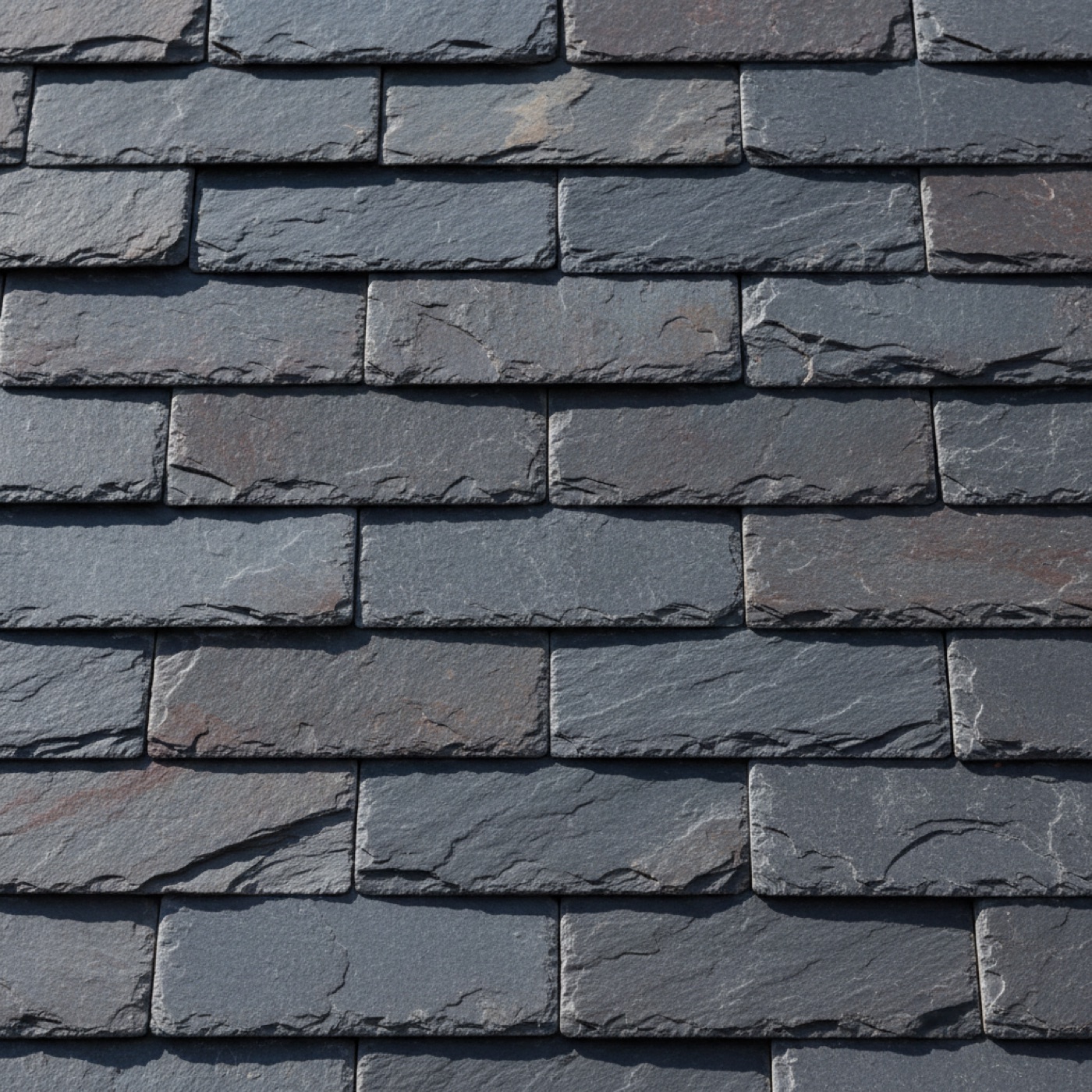
The wide range comes down to one main choice: natural quarried slate versus synthetic slate. Natural slate carries the highest material cost and needs specialized labor. Synthetic slate, made from engineered polymers, mimics the look of real slate roofing at a lower price and a fraction of the weight, which can also reduce or eliminate the reinforcement cost. Both can deliver the classic look Long Island homeowners want for slate roof tiles, but the budget difference is significant.
What drives the cost of a slate roof?
Slate pricing is not one flat number per square foot. Several factors move the final total, and understanding them helps you read a quote accurately rather than guessing whether it is reasonable.
- Slate type: Natural quarried slate costs the most. Synthetic and composite slate cost less and weigh far less.
- Labor: Labor accounts for 50% to 60% of the total, since slate installation is a specialized craft that not every roofer performs.
- Roof structure: Slate is heavy, so many homes need framing reinforcement. This Old House puts typical reinforcement between $1,000 and $10,000.
- Roof size and pitch: Steeper, more complex roofs with valleys, dormers, and chimneys take longer and cost more to detail correctly.
- Tear-off and permits: Removing the old roof and pulling the required Nassau County building permit both add to the total.
Because slate is a lifetime investment, the reinforcement cost is worth confirming early. A qualified roofer will evaluate whether your framing can carry natural slate or whether a lighter synthetic product makes more sense for your home.
How does slate compare to cedar shake on cost?
Cedar shake is the other premium, natural-material roof many Long Island homeowners weigh against slate, so a direct cost comparison helps. A cedar shake roof cost generally runs $6 to $15 per square foot installed for real wood, with synthetic cedar shake landing around $12 to $20 per square foot, according to This Old House’s 2026 cedar shake cost guide.
That makes cedar shake usually less expensive up front than natural slate, but the tradeoff is lifespan and maintenance. Cedar typically lasts 30 to 50 years with regular upkeep, while slate can last a century. Cedar also needs periodic treatment against moisture, rot, and insects, which slate does not. For a homeowner focused on the lowest lifetime cost and the longest service life, slate often wins despite the higher starting price. For a homeowner who wants a natural look at a lower entry cost, cedar is a reasonable middle ground.
What does a slate roof cost by roof size?
Roof size is the single biggest driver of the total, so it helps to see the numbers scaled. These 2026 ranges cover materials and labor for a straightforward installation, before reinforcement or complex detailing:
- 1,200 sq ft: roughly $14,000 to $36,000
- 1,600 sq ft: roughly $19,000 to $48,000
- 2,000 sq ft: roughly $24,000 to $60,000
- 2,500 sq ft: roughly $30,000 to $75,000
These figures assume a full roof replacement with tear-off, which is the standard on Long Island for the reasons covered below. A home that needs framing reinforcement or has a steep, cut-up roofline will land toward the upper end, while a simpler roof or a synthetic slate product will sit lower.
What should Long Island homeowners know before installing slate?
Beyond the base price, a few Nassau County specifics shape the real cost and timeline of a slate roof. Getting these right avoids surprise expenses partway through the project.
First, expect a full tear-off. New York State’s building code prohibits installing new roofing over an existing wood shake, slate, clay, or asphalt-cement roof, or over any roof that already has two layers, as spelled out in the Town of North Hempstead’s roofing permit requirements. That means a slate installation almost always includes removing the old roof down to the deck, which is already priced into the ranges above but rules out a cheaper layover.
Second, plan for a permit. Both the Town of Hempstead and the Town of North Hempstead require a building permit for a full roof replacement, and your contractor should carry a valid Nassau County home improvement license. A roofer who suggests skipping the permit is a warning sign, not a way to save money.
Third, factor in weight and wind. Slate’s durability is a real advantage in a region where wind is the primary roof-damaging weather event, but that same weight is why a structural check matters on older Nassau County homes. Confirm the reinforcement scope in writing before work begins.
Is a slate roof worth it on Long Island?
For the right home, yes. The value case for slate is not the sticker price, it is the cost spread across decades of service. A slate roof commonly lasts 75 to 100 years or more, so a homeowner who installs slate once may never replace the roof again, while an asphalt roof might be replaced two or three times over the same period.
Slate also resists fire, will not rot, and adds lasting curb appeal that suits the historic architecture found across Nassau County villages. For homeowners weighing the upfront number against a long horizon, roof financing options can make a slate or synthetic slate roof workable without draining savings, spreading the investment into predictable monthly payments.
How do you choose a slate roofer on Long Island?
Slate is unforgiving of inexperience, so the installer matters as much as the material. A poorly detailed slate roof leaks and fails early, erasing the longevity you paid for. A few things worth confirming before you hire:
- Real slate experience. Ask to see slate and synthetic slate projects the roofer has completed, not just asphalt work.
- Proper licensing and permits. Confirm a Nassau County home improvement license and that the company pulls the required town permit.
- A written, itemized scope. Reinforcement, tear-off, flashing, and underlayment should all be spelled out, so nothing becomes a surprise change order.
- Manufacturer-backed materials. Ask what warranty covers the slate itself and what covers the workmanship.
Rebuild America has worked on Long Island homes and local landmarks for generations, including the specialized craft that natural and synthetic slate demand. That long track record is exactly what separates a slate roof that lasts a century from one that needs rework in a decade.
Slate Roof Cost FAQs for Long Island Homeowners
How long does a slate roof last?
Natural slate commonly lasts 75 to 100 years or more, and some historic slate roofs have lasted well beyond a century. Synthetic slate typically carries warranties of 40 to 50 years. Both outlast a standard asphalt roof, which is usually replaced every 20 to 30 years, and that longevity is central to slate’s long-term value.
Why is slate roofing so expensive?
Slate costs more because the material itself is premium, the installation is a specialized craft, and the weight often requires structural reinforcement. Labor alone makes up 50% to 60% of the total. You are paying for a roof that can last a lifetime rather than one you replace several times.
Can I install slate over my existing roof?
No. New York’s building code prohibits roofing over an existing slate, wood shake, or two-layer roof, so a Long Island slate installation requires a full tear-off to the deck. This is already reflected in standard slate pricing and is one reason the material is not a low-cost option.
Is synthetic slate cheaper than natural slate?
Yes. Synthetic and composite slate cost less per square foot than natural quarried slate and weigh far less, which can reduce or remove the need for framing reinforcement. It delivers a similar look to natural slate roof tiles at a lower total cost, making it a popular middle ground for Nassau County homeowners.
Do I need a permit for a slate roof in Nassau County?
Yes. A full roof replacement requires a building permit from your town, such as the Town of Hempstead or Town of North Hempstead, and your contractor should hold a valid Nassau County home improvement license. A reputable roofer handles the permit as part of the project.
Get a Slate Roof Estimate from Rebuild America
If you are weighing a slate or synthetic slate roof for your Long Island home, the smartest first step is an honest, written estimate based on your actual roof and framing. Schedule a free estimate with Rebuild America and get clear numbers before you decide.